A territory marked by conflict
For more than 40 years, Casamance, a region in southern Senegal, has been marked by a conflict between the Movement of Democratic Forces of Casamance and the Senegalese state. Begun in 1982, the conflict has left a heavy imprint, not least the contamination of the territory by anti-personnel mines and other explosive devices.
Scattered over the course of the fighting, these devices remain a major threat to local communities today and hold back the region's development.
A mine action project in Casamance
In response, HAMAP-Humanitaire, in partnership with the Association pour la Promotion des Initiatives Territoriales (APIT) and Senegal's National Mine Action Centre, ran a mine action project in the department of Bignona, and more specifically in the North Sindian area.
Objectives of the project
- Identify dangerous areas
- Train local actors
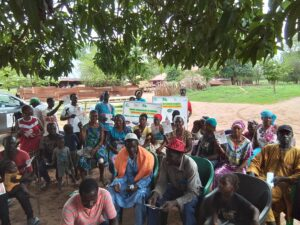
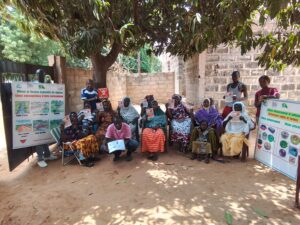
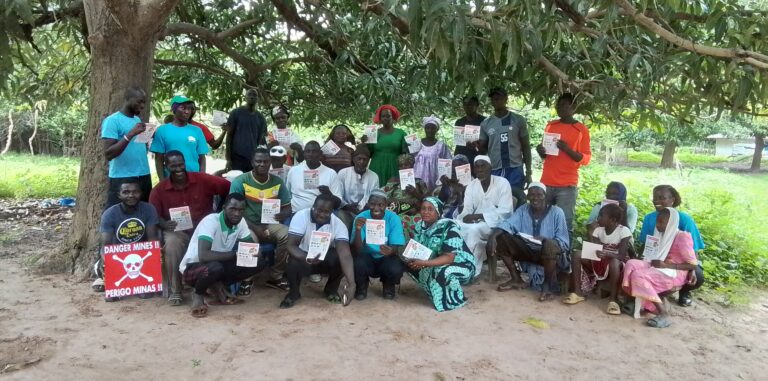
- Raise public awareness of the risks posed by explosive ordnance
In a year of work, the project met these objectives. As this first phase draws to a close, the results achieved open the way to the next steps.
Mines with dramatic consequences for local people
Explosive ordnance is a constant danger: every journey can become a mortal risk for local communities.
Impacts on daily life
- Farmland out of reach
- Difficulty in working the fields
- Rising food insecurity
- Deepening poverty
Social and territorial impacts
- Some areas abandoned, particularly near the borders with Gambia and Guinea-Bissau
- Forced displacement of communities
- Breakdown of the social fabric
- Communities slower to rebuild
Conversations with residents reveal lasting distress and high expectations of any initiative to make the territory safe again.
The mine action project: training, awareness raising and identification
Since 1 December 2023, HAMAP-Humanitaire and its partner APIT have rolled out several structured activities in response to this crisis.
Strengthening local skills
- 7 community liaison officers trained, 2 of them women
- Supervision provided by HAMAP-Humanitaire experts
- Staff from the Ziguinchor region
- Command of several local languages (Jola, Mandinka, Fula), which makes communication with communities easier
Raising public awareness
- More than 10,000 people reached directly
- Nearly 400,000 people reached through radio campaigns
- Open-air sessions, particularly in schools
- Interactive presentations of around 40 minutes
Identifying dangerous areas
- 87 localities visited in the district of Sindian
- 29 dangerous areas identified
- A total surface area of more than 900,000 m2 affected
Constraints encountered
- Remoteness of the areas of operation, 2 to 4 hours from Ziguinchor
- Difficult access in the rainy season
- Narrow roads making travel complicated
- Reluctance among some residents to share information about the presence of mines
What comes next?
Identifying dangerous areas is an essential first step. For life to return to normal and for people to be safe, the project needs to continue.
Steps envisaged
- Launch of a second phase including clearance operations
- This phase conditional on securing funding
- Possible extension to other contaminated areas, particularly in the Sedhiou region
The importance of strengthening local capacity
- Ongoing training of local experts
- Adapting activities to conditions on the ground
- Reducing the risks of an ill-suited outside intervention
- Ensuring the mine problem is dealt with for the long term
A matter of reconstruction and resilience
Projects such as the one led by HAMAP-Humanitaire play a key role in rebuilding the region, restoring people's confidence and allowing them to take full possession of their territory again.