Mine Action in Iraq
Clearance, explosive ordnance risk education and capacity building for national actors, from Sinjar district to Dhi Qar governorate.
Key figures
THE SITUATION
IN IRAQContamination, casualties and the international framework
Treaty status
Iraq has ratified the Ottawa Treaty banning anti-personnel mines (State Party since 2008) and the Oslo Convention on Cluster Munitions (State Party since 2013). Since then, Iraq has consistently voted in favour of promoting international treaties and takes part in almost every international event on the subject.
Contamination
Iraq faces historic contamination from the war with Iran (1980-1988), the Gulf War (1991) and the United States-led coalition invasion of 2003, compounded by more recent contamination from improvised explosive devices laid by the Islamic State group and other armed groups between 2014 and 2017.
Casualties
Every year, casualties from explosive ordnance and Explosive Remnants of War (ERW) are recorded in Iraq, though they account for only a small share of the global total. Between 2011 and 2021, the 1,639 Iraqi casualties represented just 2% of all casualties over that period. Since 2020, the annual number of recorded casualties has been relatively stable, with an average of 165 people injured or killed each year.
Local partners
One main partner in 2026, Chabayish Organisation for Ecological Tourism (COET), together with close working and coordination relationships with various Iraqi state bodies (see the detail for each project). HAMAP-Humanitaire has also worked with other partners such as Shareteah Humanitarian Organization (SHO) and Mile Organization for Environmental Protection.
2 staff members based in Erbil.
Our work in the country
IN IRAQ
SINCE 2017Localisation and capacity building for national actors at the heart of our work
Present in Iraq since 2017, HAMAP-Humanitaire runs a Mine Action programme built entirely on localisation and on strengthening national actors.
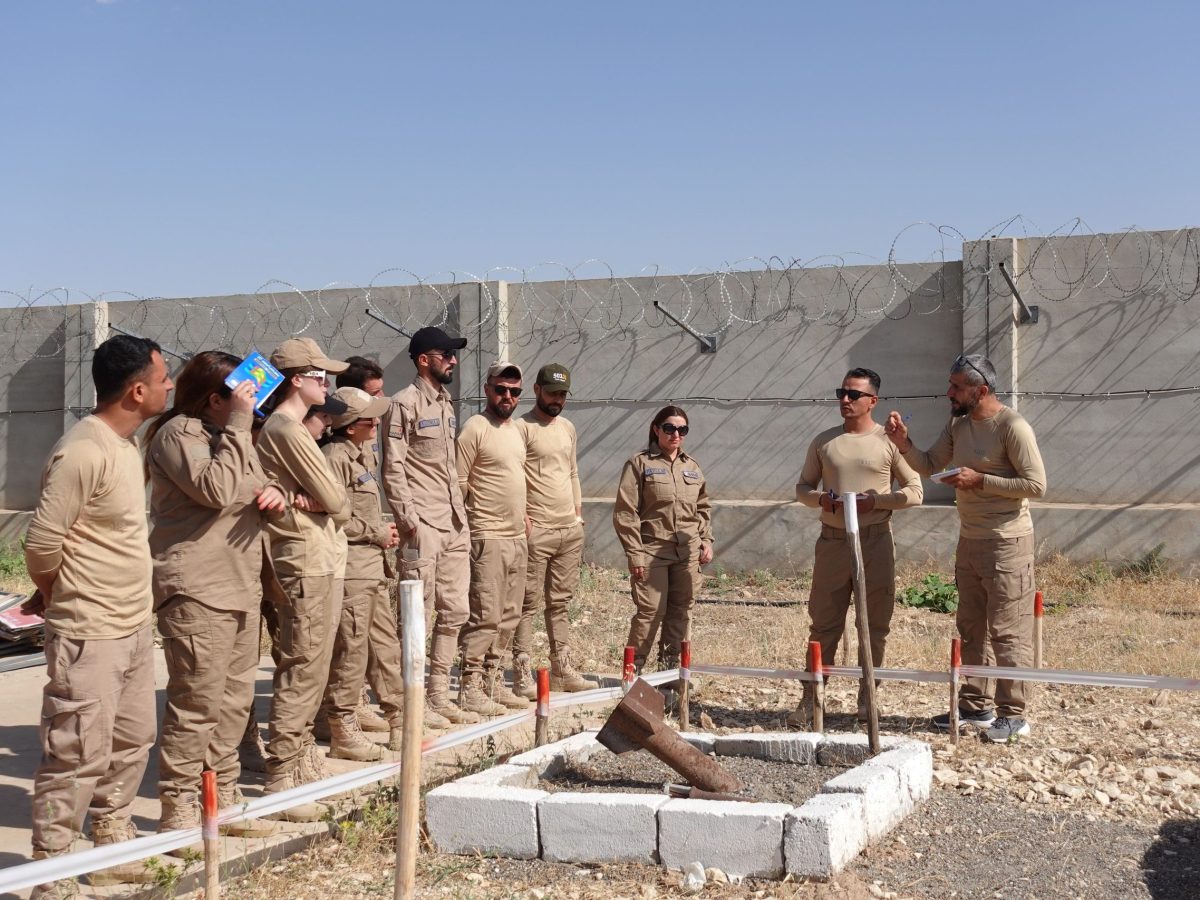
Initially focused on building the capacity of local authorities in northern Iraq, notably through training against improvised explosive devices, HAMAP has been supporting local NGOs since late 2019.
Read more about our work
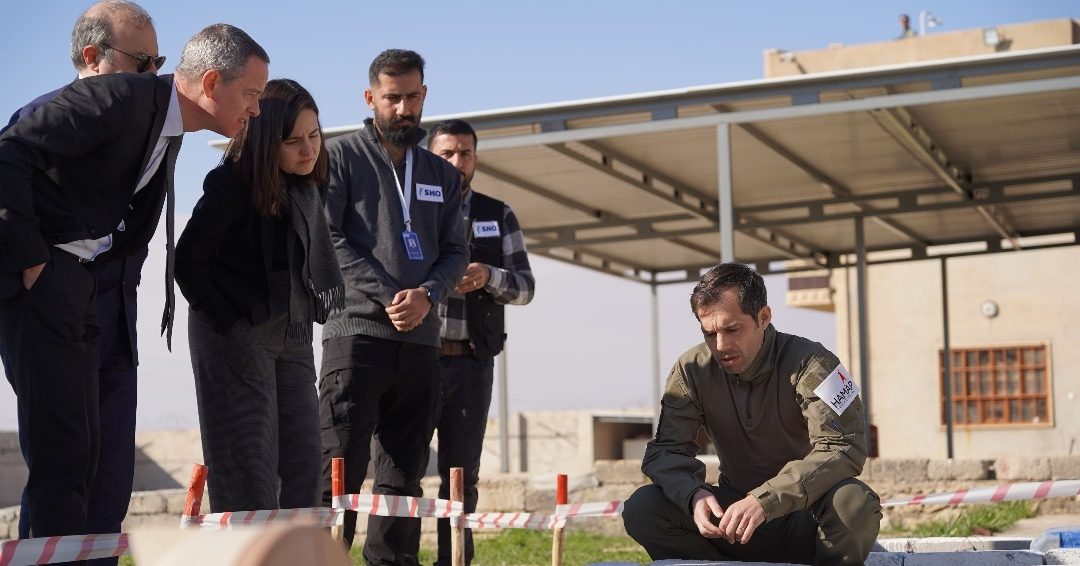
Our vision is to enable Iraqi NGOs, such as SHO, the first civil society organisation active in mine action, to manage explosive risks independently.
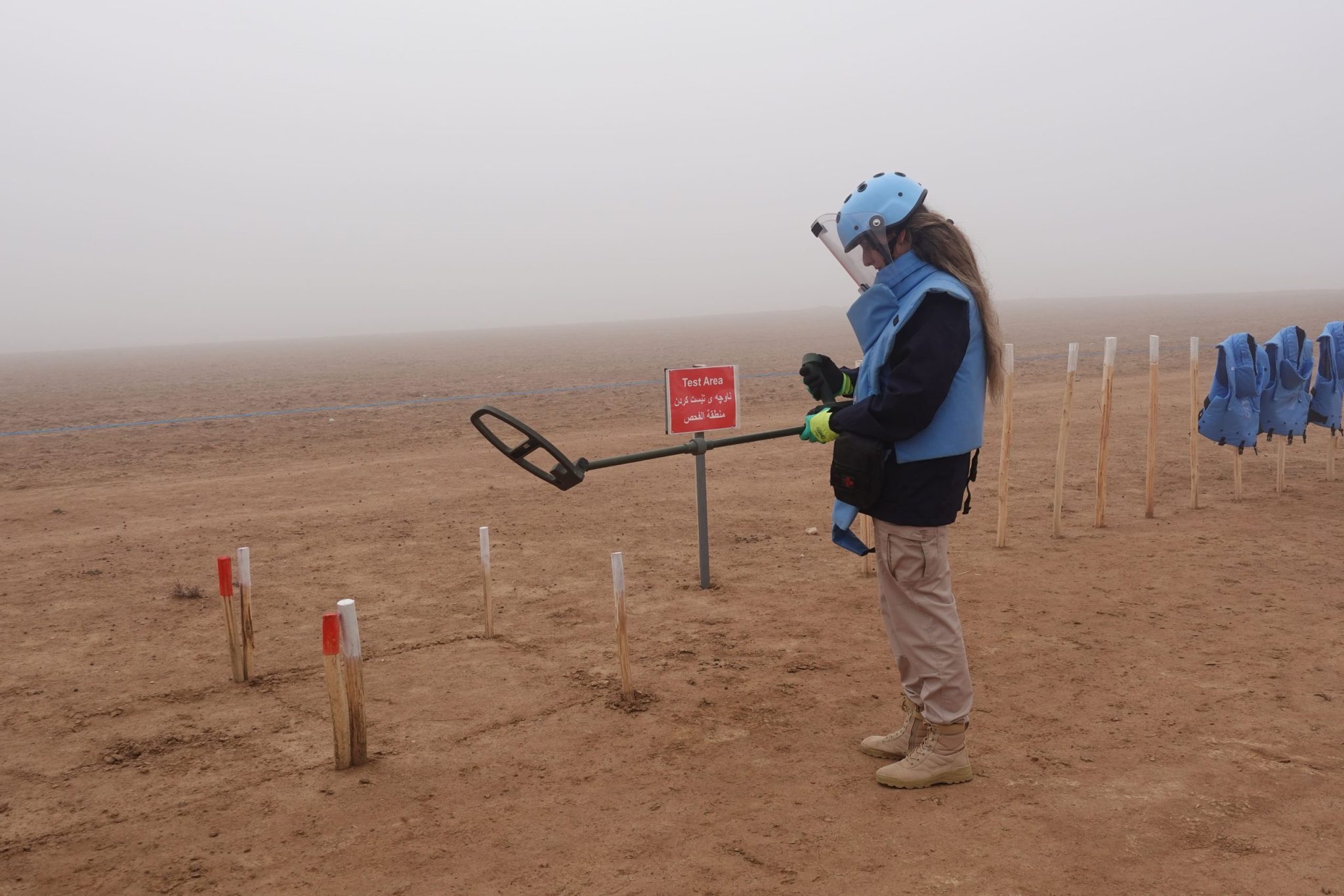
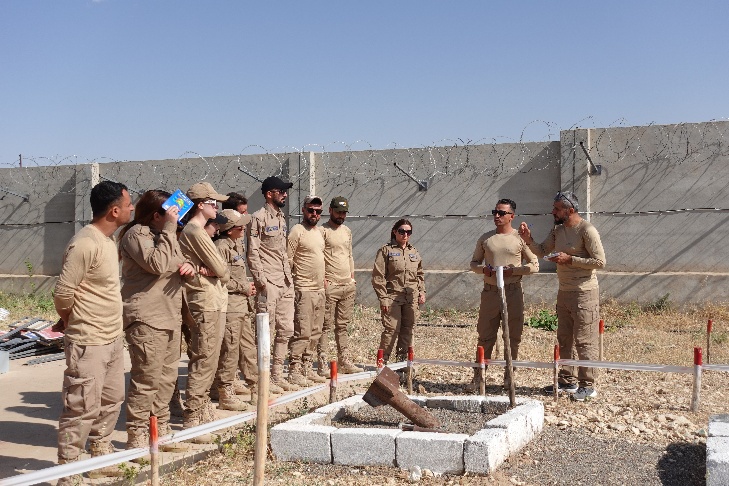
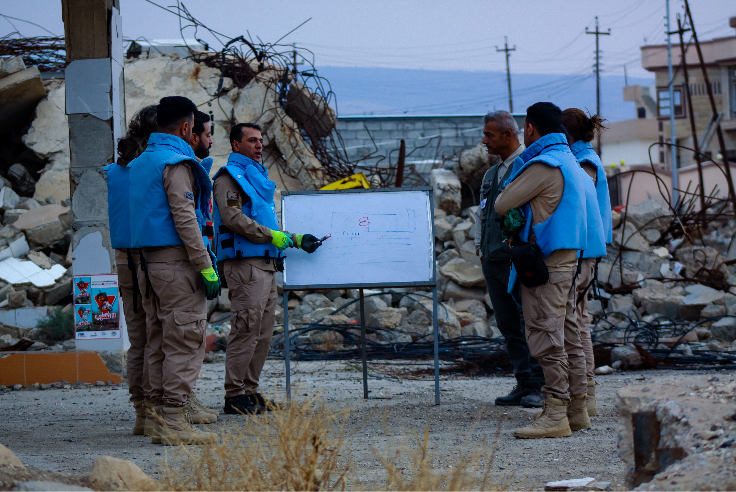
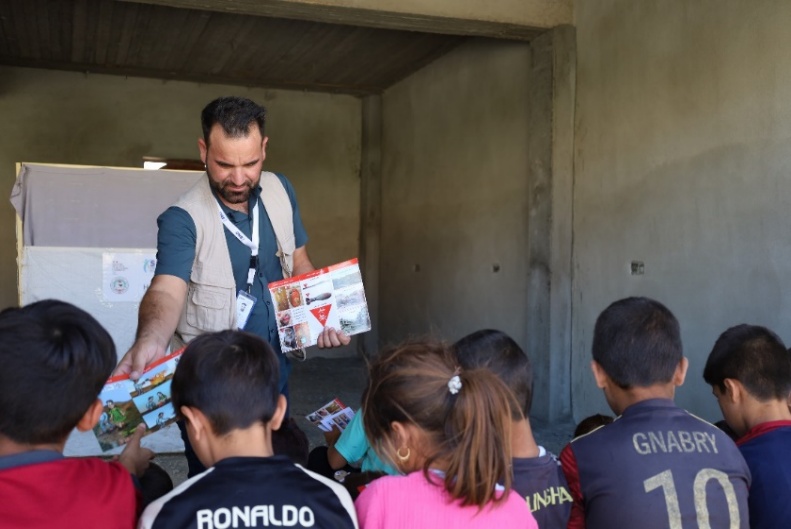
Our approach combines land clearance, Explosive Ordnance Risk Education (EORE) and Non-Technical Survey (NTS), together with the technical and organisational capacity building of our partners.
Our aim is to ensure a smooth transition from post-crisis emergency response to lasting socio-economic recovery for affected communities.
In southern Iraq, in Dhi Qar governorate.
Our projects
OUR PROJECTS IN IRAQFrom Sinjar to Dhi Qar, alongside our local partners
 Ongoing
MIRATH: Archaeological Rehabilitation and Historical Tourism in Iraq
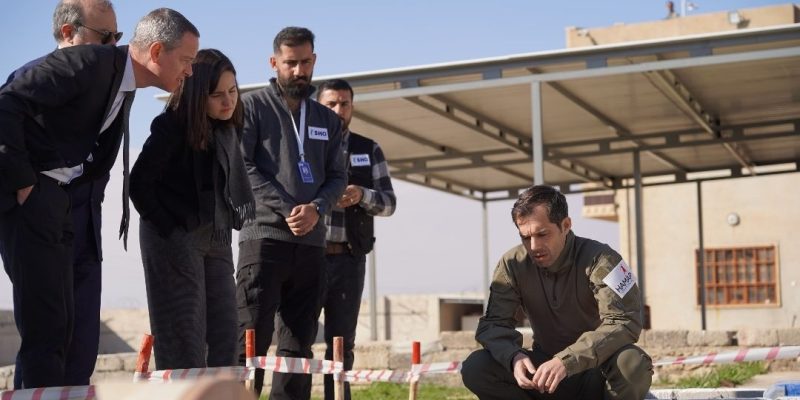
The MIRATH project aims to support the clearance of the main archaeological and tourism sites in Dhi Qar governorate, heavily affected by the presence of explosive remnants of war (ERW). This contamination restricts access to heritage sites, holds back the development of tourism and exposes local communities to security risks.
 Completed project
A Safer Sinjar
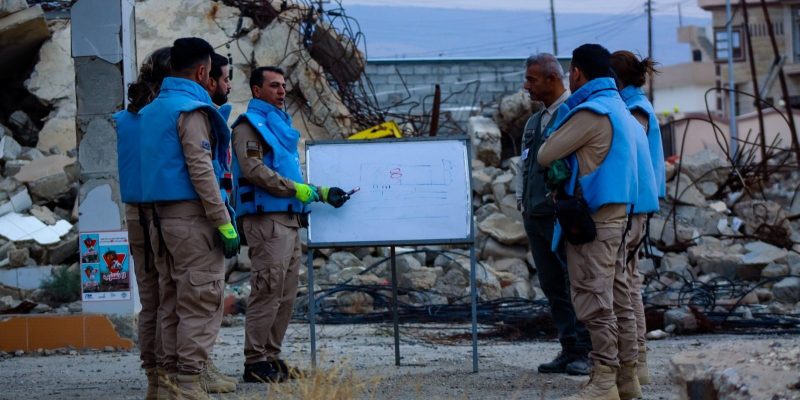
Sinjar district, severely affected by the Islamic State occupation from August 2014 and by several years of conflict until October 2017, remains heavily contaminated by explosive ordnance, including mines, explosive remnants of war and improvised devices, which still pose a major threat to civilians today. This contamination is a serious obstacle to the safe and lasting return of displaced people, and exposes the communities that stayed behind to daily risk.
Testimony
After years of strategic partnership and continuous support, both technical and institutional, from HAMAP-Humanitaire, Shareteah Humanitarian Organization (SHO) has considerably strengthened its operational capacity, its technical expertise and its organisational systems in mine action. This long-standing collaboration has improved performance in the field, reinforced safety standards and delivered more effective support to affected communities. As this phase of the partnership closes in 2025, SHO is proud to have established itself as a recognised national actor in Iraq's mine action sector, committed to sustaining its achievements and extending its humanitarian impact.
SHO expresses its sincere gratitude to HAMAP-Humanitaire for this enduring partnership and its invaluable support over the years. This collaboration has played a key role in strengthening our organisation's technical and operational skills, enabling it to become a trusted national actor. As this phase draws to a close in 2025, SHO remains deeply grateful for this shared commitment to protecting communities and advancing humanitarian mine action.
Ismat Selevany Executive Director, Shareteah Humanitarian Organization (SHO)
Partners
THEY SUPPORT OUR WORK IN IRAQ
Our donors and funding partners
Technical insert
Clearance in the service of heritage in Iraq: a multidisciplinary approach
In Iraq, explosive contamination is not confined to urban or agricultural areas. In Dhi Qar governorate, it also affects major archaeological sites and unique landscapes such as the Mesopotamian Marshes, inscribed on the UNESCO World Heritage List. Left over from past conflicts, this unexploded ordnance (UXO) often lies both at the surface and at depth, including in areas of high heritage value.
This contamination is at once a security, cultural and economic issue. It restricts safe access to historic sites, exposes local communities to constant risk and holds back the development of tourism, identified as a major driver of economic recovery in the Dhi Qar region.
Clearance in these heritage settings presents specific challenges. Operations must use adapted methods in order to preserve the integrity of archaeological remains, which calls for close coordination between clearance specialists and cultural authorities, as well as technologies allowing precise intervention, including at depth.
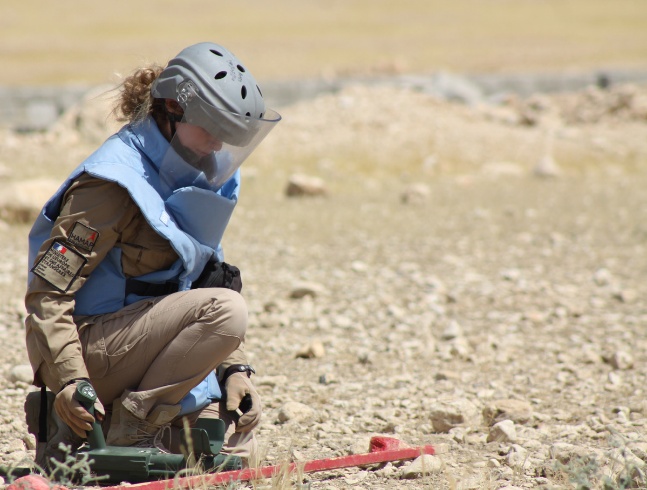
In response, HAMAP-Humanitaire is developing an integrated approach combining local capacity building, technical innovation (notably through the use of large-loop detectors) and collaboration with heritage stakeholders. This multidisciplinary approach aims to secure the sites for the long term, support their tourism potential and contribute to protecting cultural heritage while improving the safety of local people.
In the field
OUR TEAMS
IN IRAQ
SUPPORT OUR
WORK IN IRAQ
Since 2017, HAMAP-Humanitaire has been working in Iraq alongside national actors: more than 200,000 people have benefited from our clearance and risk education work.
Donate 66% of your gift is tax-deductible in France