PALESTINE
French-Palestinian decentralised cooperation for access to water and sanitation in the West Bank.
Our projectsWASH context
PALESTINE,
WATER UNDER CONSTRAINTA scarce resource, subject to technical and administrative constraints
As surface water resources are almost non-existent in Palestine, groundwater is the main source of supply.
The challenge lies chiefly in accessing and mobilising it.
Read more about the context
Abstraction works and their operation face technical constraints, because of the depth of the water table, and administrative constraints, because of Israeli control over infrastructure projects and abstracted volumes.
A large share of the water consumed in the West Bank is therefore bought wholesale from Israel.
For these reasons, despite a high water coverage rate in the West Bank (90%), continuity of service is rarely assured, with water actually delivered for only a few hours a day.
To make up for this, households have individual roof tanks in which to store the water delivered.
The connection rate to a mains sewerage system is around 30%.
Moreover, where sanitation infrastructure does exist, some of it is ageing, undersized and partly out of service.
As a result, a large share of wastewater is discharged into the sea and watercourses, or infiltrated with no treatment or only partial treatment.
Several modern, working treatment plants have nonetheless been built in recent years (Ramallah, Jenin, Jericho, Nablus, Tubas), most of them designed to reuse treated wastewater (agriculture, green spaces, road cleaning), a sign of growing awareness of the value of water in a context of pronounced scarcity in Palestine.
water coverage rate in the West Bank, a high figure
connection rate to a mains sewerage system
Our work
ACTING FOR WATER
IN PALESTINE
Since 2012, HAMAP-Humanitaire has been working in the West Bank as project management support (AMO) for French-Palestinian decentralised cooperation on water and sanitation.
The French local authority leads the project; HAMAP provides support with operational, financial, administrative and logistical management.
Our work: rehabilitating and building infrastructure, strengthening management capacity, governance, and raising awareness of responsible water use.
Our local partners: the Palestinian Water Authority, Palestinian municipalities, the French Consulate and AFD in Jerusalem.
In France, we support the CEBR, the Conseil départemental de l'Aude, Toulouse Métropole and the Conseil Régional d'Occitanie.
Our projects
WATER AND SANITATION IN PALESTINE35 projects carried out since 2012.
 Ongoing
01
Ongoing
01
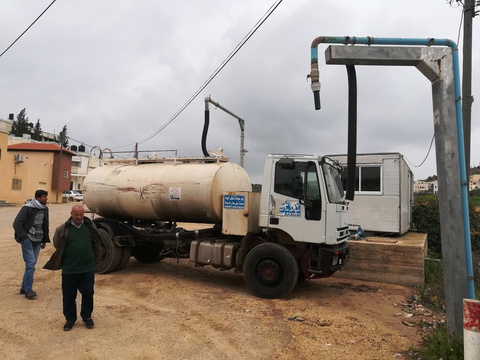
Conseil départemental de l’Aude – Jalboun cooperation
Jalboun is a village in the north-east of the West Bank, immediately next to the separation wall and to Israel. It is one of the last villages in Palestine with no drinking water distribution system for its inhabitants, who rely on tanker trucks for their supply.
 Ongoing
02
Ongoing
02
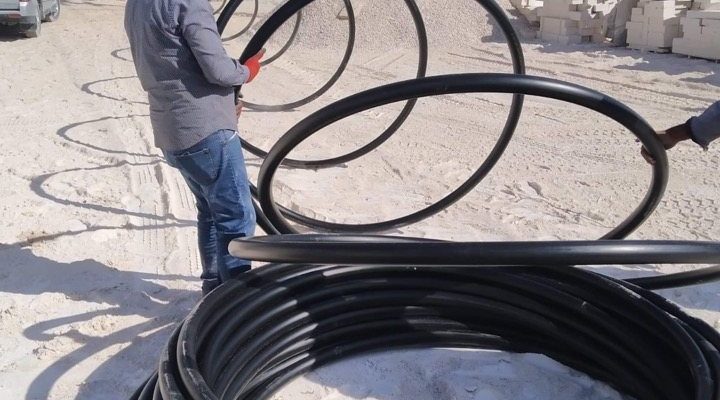
Lescar-Beit Fajjar cooperation for access to drinking water
From 2020 to 2022, HAMAP-Humanitaire supported the cooperation between the town of Lescar and the municipality of Beit Fajjar to improve access to drinking water. The project benefited 15,000 people.
 Ongoing
03
Ongoing
03
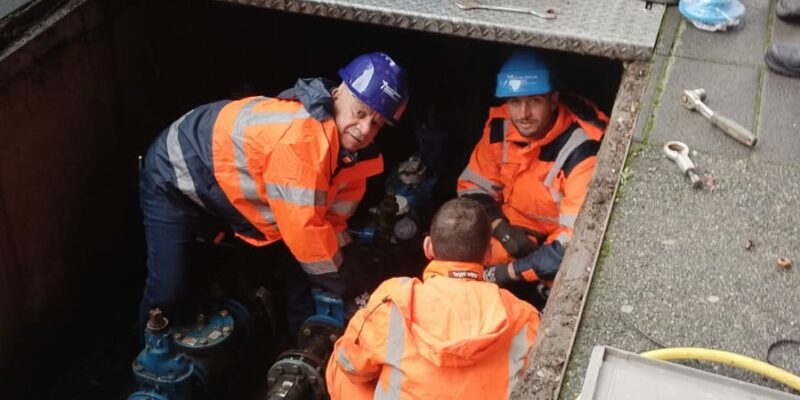
Eau du Bassin Rennais cooperation – Beitunia
Since 2015, HAMAP-Humanitaire has supported the Collectivité Eau du Bassin Rennais in the operational, logistical and budgetary delivery of its cooperation policy in Beitunia, Palestine. Our mandate covers support in identifying needs and co-designing the actions, supervision of tender procedures and administrative formalities in Palestine, monitoring of operations on site and remotely, and the preparation and accompaniment of missions for experts, trainers, elected officials and members of the steering committee.
Funding partners
THEY SUPPORT OUR WORK IN PALESTINE

SUPPORT ACCESS
TO WATER IN PALESTINE
Since 2012, HAMAP-Humanitaire has supported French-Palestinian decentralised cooperation for lasting access to water and sanitation in the West Bank.
Donate