WASH context
INDIAAccess to drinking water, sanitation and hygiene in marginalised villages
Although India has considerably improved its infrastructure and is now one of the fastest-growing economies in the world, a large share of the population still has no access to basic sanitation facilities such as toilets and clean running water.
Inequality of access to drinking water and sanitation infrastructure is acute, with more than 94% of urban residents having access to sanitation facilities, against only 56% in rural districts.
Read more about the context
Despite recent progress on sanitation thanks to major government programmes, 44% of the population, some 500 million people, still practise open defecation.
Household sanitation remains undermined by persistent taboos and cultural practices that limit regular use of latrines.
In rural areas, 71% of girls report having no knowledge of menstruation before their first period, and 88% of women and girls report using home-made alternatives such as old cloth, rags, sand or ash rather than sanitary pads during their period.
The poorest and most isolated rural communities remain the most vulnerable to water-related and hygiene-related diseases.
Despite the progress made, lasting improvement of infrastructure and health awareness remains a major challenge for rural development in India.
of urban residents have access to sanitation facilities
of the population still practise open defecation
of girls report having no knowledge of menstruation before their first period
Our work
ACTING FOR WATER
IN INDIA
In Tamil Nadu, HAMAP installs reverse osmosis drinking water treatment units in marginalised villages where people depend on tanker trucks selling water at high prices.
We build and renovate family latrines to put an end to open defecation.
Our teams run hygiene awareness sessions, with particular attention to menstrual hygiene for women and girls.
Workshops making affordable, environmentally friendly menstrual products are set up to support women's entrepreneurship and access to menstrual health.
Our projects
WATER AND SANITATION
IN INDIA2 projects carried out since 2012
 Completed project
01
Completed project
01
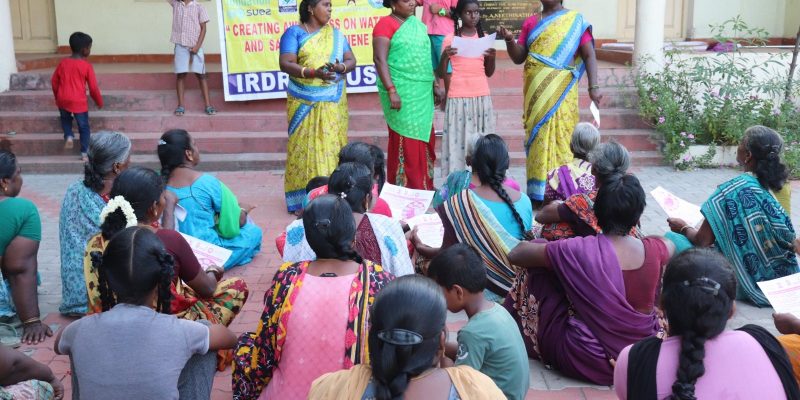
Access to drinking water and hygiene in 14 marginalised villages
Since 2024, HAMAP-Humanitaire has been working in 14 marginalised villages in the districts of Kanchipuram, Villupuram and Chengelpettu, in Tamil Nadu. The project is improving access to drinking water and hygiene for 15,000 people.
 Completed project
02
Completed project
02
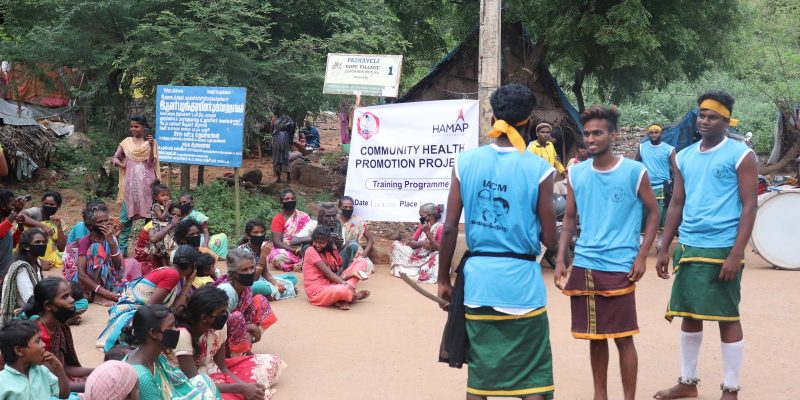
Access to water and sanitation in 3 villages near Chennai
From 2020 to 2022, HAMAP-Humanitaire supported access to water and sanitation in the villages of Melathur, Erumaiyur and Naduveerapattu, near Chennai, in Tamil Nadu. The project benefited 15,000 people.
Funding partners
THEY SUPPORT OUR WORK IN INDIA
SUPPORT ACCESS
TO WATER IN INDIA
Since 2012, more than 30,000 people have benefited from our work on access to water and sanitation.
Donate