LEBANON
Access to water, sanitation and energy in the context of a multidimensional crisis
Our projectsWASH context
LEBANONAccess to water, sanitation and energy in the context of a multidimensional crisis
Lebanon faces a complex, deep-seated water crisis, made worse by structural, economic and environmental challenges.
Since 2019, the political and economic crisis running through the country has durably weakened the stability and the functioning of the public services delivered by the State.
Read more about the context
The energy crisis limits the ability to produce and distribute electricity, which directly affects water pumping and treatment systems.
The drinking water supply is also intermittent, with a quality that often falls below international standards.
Ageing and poorly maintained infrastructure suffers major leaks that waste already scarce resources.
The tariff system, for its part, does not cover the real cost of the water service.
The absence of volumetric charging, meaning billing based on actual consumption, does nothing to encourage water saving and instead encourages waste in a context of shortage.
Surface water and groundwater also suffer from widespread pollution, with direct consequences for human health and the environment.
Sanitation remains a major challenge: only 8% of wastewater is treated in Lebanon, which reveals an extremely low level of access to sanitation services.
This situation exposes the population to health and environmental risks, while worsening the pollution of water resources.
Municipalities are left on the front line to guarantee a minimum delivery of these essential services, at a time when the financial crisis and the loss of skilled staff are sharply reducing their capacity to act.
of wastewater is treated in Lebanon
Our work
ACTING FOR WATER
IN LEBANON
HAMAP-Humanitaire began working in Lebanon in 2006 alongside the Congregation of the Antonine Sisters, which runs Notre-Dame de la Paix hospital, a humanitarian institution in Kobayat (Qoubaiyat), on the Lebanese-Syrian border in the north of the country.
Our work also supports Maison de la Misericorde, an institution located in Mount Lebanon, close to Beirut.
Several joint projects in water, sanitation, health and renewable energy have improved the care provided by these two hospital institutions to the Lebanese population and to Syrian and Palestinian refugees.
Since 2019, the crisis has left municipalities on the front line: our support also covers safeguarding the essential public services of water, sanitation and energy, and strengthening local technical skills.
In France, several local authorities have engaged in water and sanitation cooperation with Lebanon with HAMAP's support: Ramonville Saint-Agne (Haute-Garonne) with Kobayat and Andaket, and the Hydreaulys authority (Yvelines) with Antoura.
Our local partners are the Lebanese municipalities, local NGOs, the regional water boards and the cooperation department of the French embassy in Beirut.
Our projects
WATER AND SANITATION
IN LEBANON12 projects carried out since 2006
 Ongoing
01
Ongoing
01
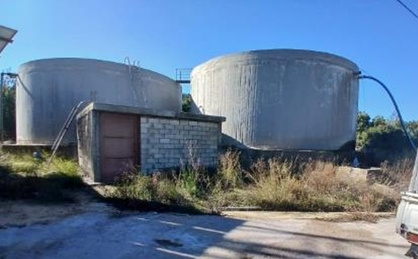
Ramonville – Kobayat and Andaket cooperation on water, sanitation and energy
Since 2019, Lebanon has been going through a political and economic crisis that has severely affected the stability and the functioning of the public services delivered by the State. Municipalities find themselves on the front line to guarantee a minimum delivery of essential services: water distribution, wastewater treatment, development of alternative energy and protection of the environment.
 Completed project
02
Completed project
02
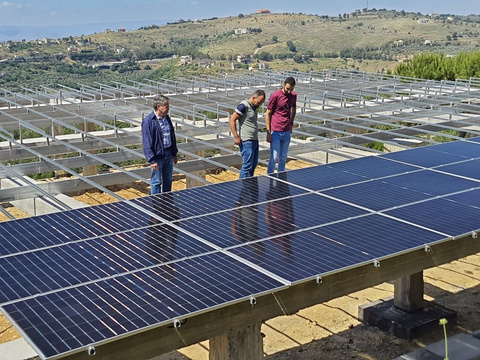
Energy self-sufficiency for Kobayat hospital
Since 2019, Lebanon has been sinking into a political and economic crisis that has severely affected the stability and the functioning of Notre-Dame de la Paix hospital in Kobayat. The crisis has badly hit the country’s energy production, and the hospital’s in particular: since 2019, the facility has had only two hours of mains electricity per twenty-four hours, the State having cut its fuel imports for power stations that are themselves ageing.
Funding partners
THEY SUPPORT OUR WORK IN LEBANON
SUPPORT ACCESS
TO WATER IN LEBANON
Since 2006, more than 40,000 people have benefited from our work on access to water and sanitation.
Donate