A structuring project for access to water in Cambodia
In the Stung Sen basin in Cambodia, the rural communes of Reaksa and Tang Krasov face major water-related challenges.
- Limited access to drinking water
- Lack of sanitation facilities
- Inadequate hygiene practices
- High health and environmental risks
To address these challenges, in November 2022 HAMAP-Humanitaire launched a multi-year project in partnership with:
- The local NGO Rain Water Cambodia (RWC)
- The local authorities
- The Rhin-Meuse Water Agency
- Toulouse Metropole
- The David Hadida Foundation
An integrated approach built on three strands
An integrated strategy
The project rests on three complementary pillars:
- Building infrastructure
- Strengthening local capacity
- Raising awareness of hygiene practices
These activities aim to:
- Give communities greater independence
- Improve the management of resources
- Contribute to the Sustainable Development Goals (SDGs)
Infrastructure for lasting access to water
Installing supply systems
In Tang Krasov:
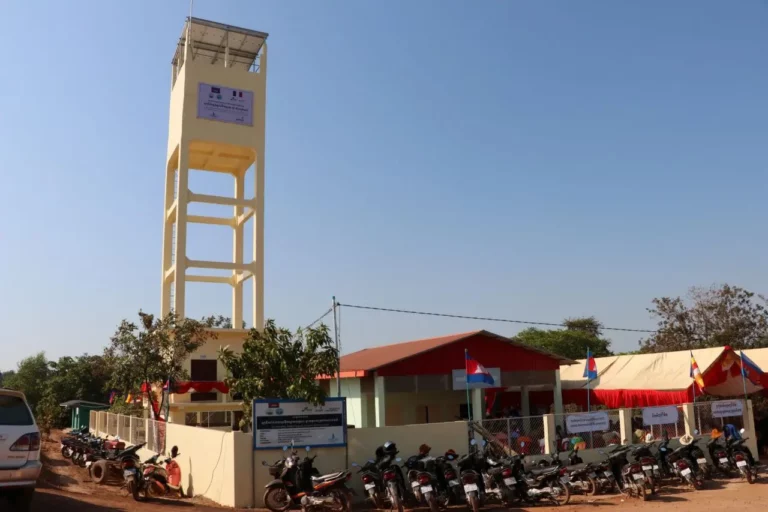
- A borehole 70 metres deep
- A 45 m3 water tower
- 7,884 metres of pipework
- A hybrid solar-powered pump
- 141 households served (more than 700 people)
In Reaksa:
- 800-metre extension of the existing network
- 14 additional households connected
The system was designed to be:
- Affordable
- Economically viable
Improving sanitation
- Construction of 150 family latrines
- Priority given to vulnerable households
- Training in use and maintenance
Objectives:
- Reduce health risks
- Prevent contamination of the environment
Strengthening local governance
Structured community management
In Tang Krasov:
- Creation of a water management committee
- 20 members trained in administrative and technical management
- Monitoring, billing and reporting handled locally
A gradual handover is under way to:
- The Stung Sen Basin Drinking Water Association (AEPSS)
Stronger coordination
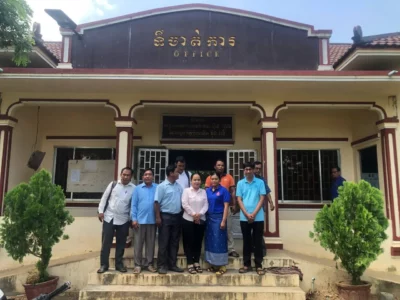
- 6 review meetings with the local authorities
- Participation in working groups on water resource management
Awareness raising and community mobilisation
Large-scale activities
- Information campaigns among households
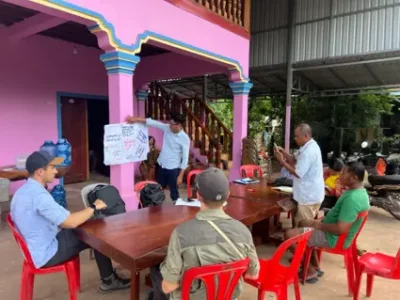
- Launch workshops and community meetings
- Training sessions in villages and schools
More than 11,000 people reached, including:
- Pupils and teachers
- Community representatives
- Service users
Monitoring, evaluation and continuous improvement
A structured framework
- Baseline survey of 130 households
- Quarterly coordination meetings
- Technical monitoring of the installations
Technical and external support
- Involvement of 3 engineering students (Arts et Metiers d'Angers)
- Independent external evaluation
Objectives:
- Measure the impacts
- Identify areas for improvement
- Strengthen local capacity
Concrete and lasting results
The project has delivered:
- A significant improvement in access to drinking water
- Better access to sanitation
- The adoption of safer hygiene practices
- Stronger local skills
Beyond the infrastructure, the project rests on:
- Community participation
- Training of local actors
- Sustainable governance
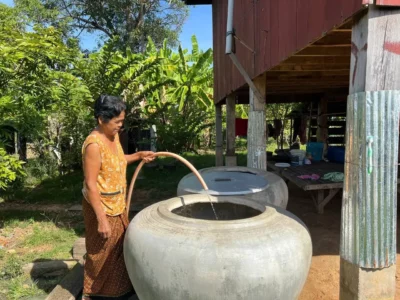
Development prospects
Towards an extension of the network
HAMAP-Humanitaire and Rain Water Cambodia are considering a new phase:
- Extension of the network in Tang Krasov
- Target: 75% of households connected, against 25% today
Expected benefits
- More subscribers
- Optimised volumes of water distributed
- A gradual reduction in costs for users
- Stronger economic viability of the service