A major humanitarian crisis in the Middle East
A year after the start of the conflict between Israel and Palestine, and as the fighting spreads further into Lebanon, the situation remains critical and unresolved.
- More than 44,000 people killed
- Several million civilians affected
- Sharply rising humanitarian needs
- A critical water and sanitation situation
HAMAP-Humanitaire wishes to raise the alarm about the severity of this crisis, particularly regarding access to water, sanitation and the dangers linked to explosive ordnance.
« Nothing can justify the abhorrent acts of terror committed by Hamas on 7 October, nor the taking of hostages, condemned time and again. And nothing can justify the collective punishment of the Palestinian people since » , Antonio Guterres, Secretary-General of the United Nations.
A call to protect civilians
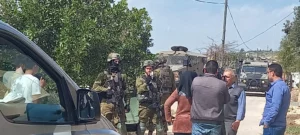
We call for urgent measures to protect people and guarantee access to humanitarian aid.
- An end to the bombing of civilian populations
- Respect for human rights by all parties
- The lifting of restrictions that hinder humanitarian aid
Water, a central issue in the conflict
Access restricted for decades
For several decades access to water has been at the heart of tensions in the region. From the Six-Day War in 1967 to the Oslo Accords in 1995, water has become a strategic issue.
Palestine has been deprived of its sovereignty over water, limiting its capacity to manage its resources. Today:
- 64% of Palestinians do not have access to running water all year round
- Average consumption is below WHO standards
A situation that has worsened since 2023
Since 7 October 2023 the situation has deteriorated considerably:
- Water cuts in several areas
- Massive destruction of water infrastructure
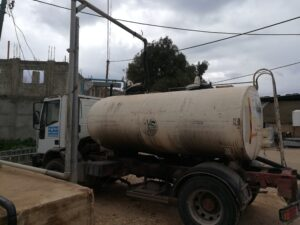
- Sharply reduced access to water
In Gaza people have less than 2 litres of water a day, far below the emergency threshold set by the WHO (15L).
Testimonies from the field
Ramallah and Beitunia
Nael, a local engineer, reports:
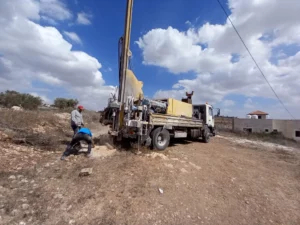
« All water resources are entirely controlled by Israel (…) We have seen a significant drop in water quantities, forcing the supply to be rationed. »
Jalboun
Hani, a HAMAP-Humanitaire partner, explains:
« Water infrastructure has been damaged on several occasions (…) The water is exposed to pollution and the risk of disease is rising. »
Beirut
Sarah, a Lebanese colleague, shares:
« I live day by day (…) our team keeps helping people and raising their awareness despite the difficulties. »
The impact of bombing and explosive ordnance
The massive use of explosive weapons in civilian areas is making the situation considerably worse.
- More than 70,000 tonnes of bombs dropped on Gaza
- Vital infrastructure destroyed
- A heavy human toll
- Increased contamination by explosive ordnance
In Lebanon:
- 8,900 recent air strikes
- More than 2,000 dead
- More than one million displaced
Humanitarian operations severely disrupted
Increasingly difficult working conditions
The war has deeply disrupted operations in the field:
- Logistical and security obstacles
- Water and power cuts
- Deteriorating living conditions
Mobilisation and a call for solidarity
Despite the obstacles, HAMAP-Humanitaire and its partners remain mobilised to support the affected populations.
- Activities maintained in the field
- Support for access to water and sanitation
- Continued mine action work
- Cooperation with local partners
We refuse to stand by and watch this crisis, and we call for international solidarity.
Supporting people in danger
To continue our work and meet urgent needs:
- Support water access projects
- Take part in humanitarian action
- Help vulnerable populations
- Contribute to reconstruction