Activity 01
Identification of priority areas
Joint assessments and a Heritage Impact Assessment (HIA) to select and validate the contaminated archaeological sites to be treated first, in liaison with the competent authorities
Iraq – Dhi Qar governorate, southern Iraq
The project
The MIRATH project aims to support the clearance of the main archaeological and tourism sites in Dhi Qar governorate, heavily affected by the presence of explosive remnants of war (ERW). This contamination restricts access to heritage sites, holds back the development of tourism and exposes local communities to security risks. The project follows an approach that combines mine action, heritage preservation and economic recovery.
Areas of operation
The ancient city of Eridu (a UNESCO World Heritage site) · Tel Al-Lahm · Tel Al-Zeid
The figures in detail
indirect beneficiaries
Around 17,220 residents of Dhi Qar governorate; total population affected: 2.3 million people (improved safety and tourism)
Our objective
Contribute to the protection of communities and of heritage in Dhi Qar, including the Ahwar (Mesopotamian Marshes) threatened by the climate, by making land safe from explosive hazards, by preserving archaeological sites and by supporting the development of tourism.
In the field
Activity 01
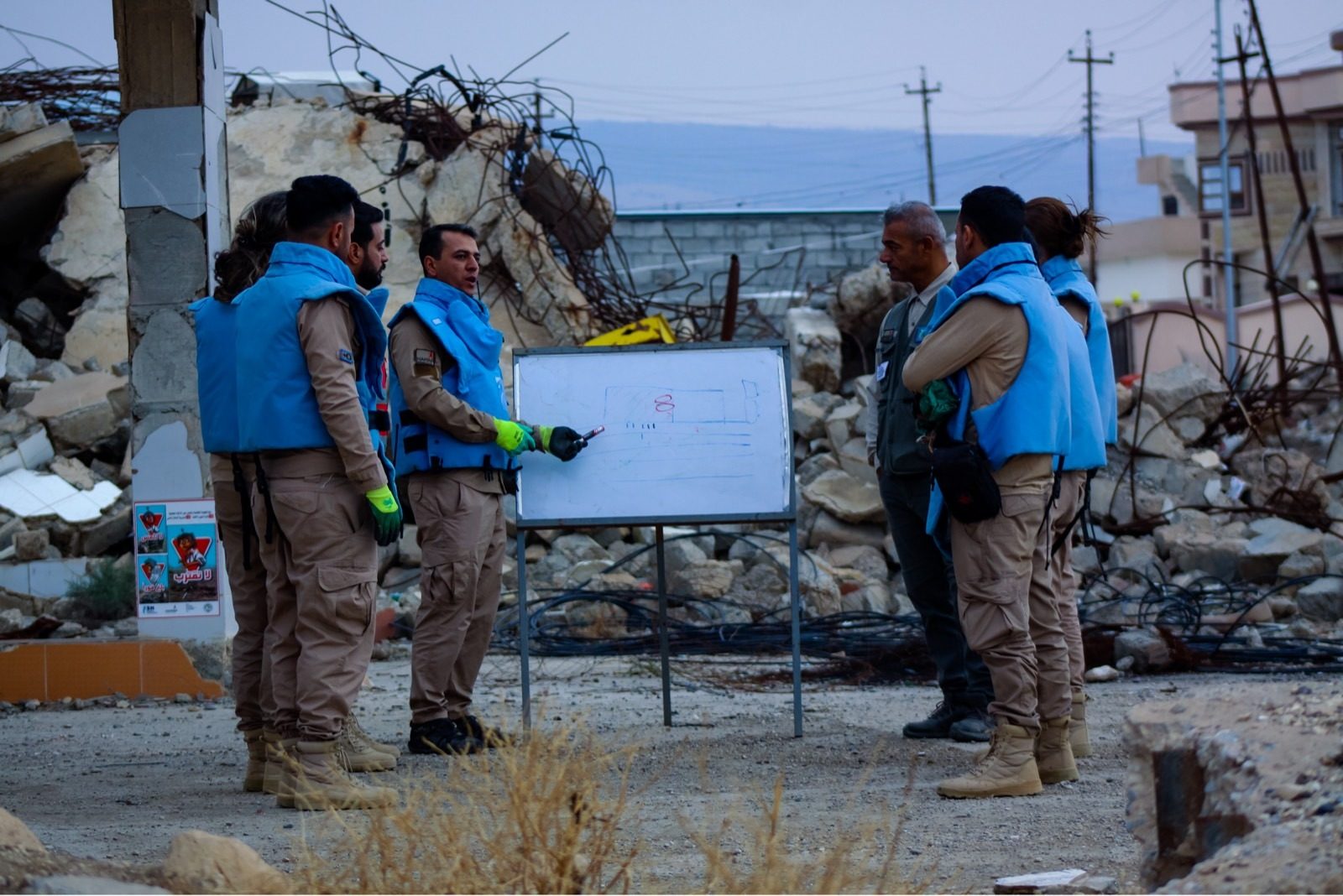
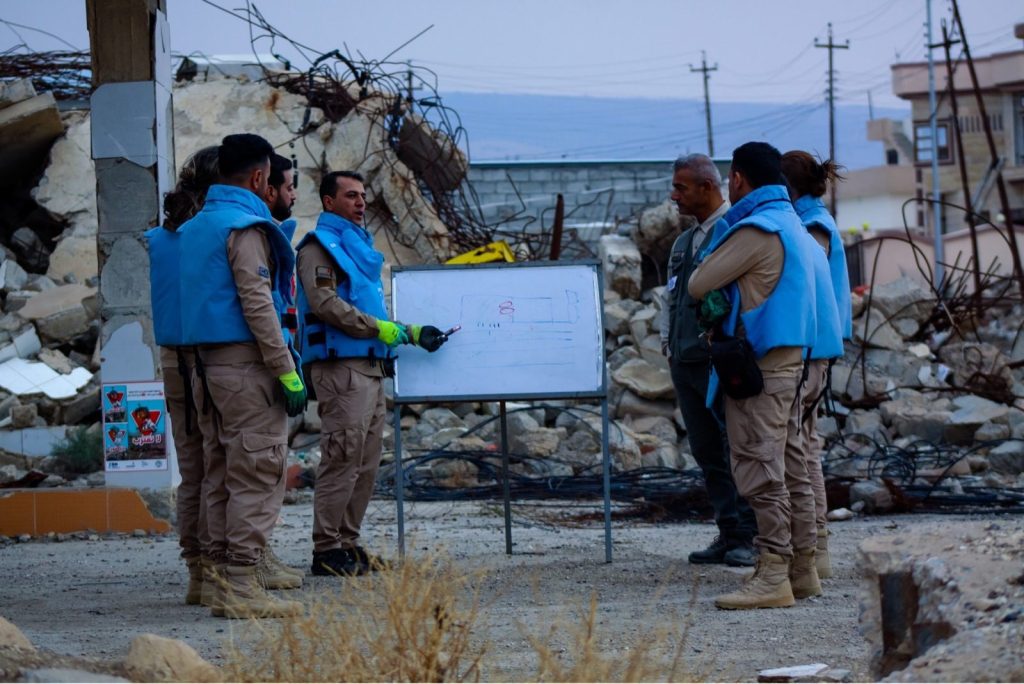
Joint assessments and a Heritage Impact Assessment (HIA) to select and validate the contaminated archaeological sites to be treated first, in liaison with the competent authorities
Activity 02
Training of 30 EOD staff from the Iraqi Civil Defence (technical, safety, first aid and quality control modules compliant with IMAS/NMAS standards), plus complementary international training for a core group of experts in supervision, oversight and operational quality management
Activity 03
Protocols with the archaeological authorities for heritage-sensitive operations, including the presence of archaeologists and the sharing of geophysical data
Activity 04
Clearance and securing of around 2,000,000 m² of contaminated priority sites, allowing them to reopen safely
Lead local partner
Chabayish Organisation for Ecological Tourism (COET)
A local organisation specialising in heritage preservation and the promotion of ecological tourism.
Actors and partners
Funders
French Ministry for Europe and Foreign Affairs, Crisis and Support Centre (CDCS), France
Our expertise
Clearance in the service of heritage in Iraq
In Iraq, explosive contamination is not confined to urban or agricultural areas. In Dhi Qar governorate, it also affects major archaeological sites and unique landscapes such as the Mesopotamian Marshes, inscribed on the UNESCO World Heritage List. Left over from past conflicts, this unexploded ordnance (UXO) often lies both at the surface and at depth, including in areas of high heritage value.
This contamination is at once a security, cultural and economic issue. It restricts safe access to historic sites, exposes local communities to constant risk and holds back the development of tourism, identified as a major driver of economic recovery in the Dhi Qar region.
Clearance in these heritage settings presents specific challenges. Operations must use adapted methods in order to preserve the integrity of archaeological remains, which calls for close coordination between clearance specialists and cultural authorities, as well as technologies allowing precise intervention, including at depth.
In response, HAMAP-Humanitaire is developing an integrated approach combining local capacity building, technical innovation (notably through the use of large-loop detectors) and collaboration with heritage stakeholders. This multidisciplinary approach aims to secure the sites for the long term, support their tourism potential and contribute to protecting cultural heritage while improving the safety of local people.
Every gift funds our field operations directly.
Donate 66% of your gift is tax-deductible in France